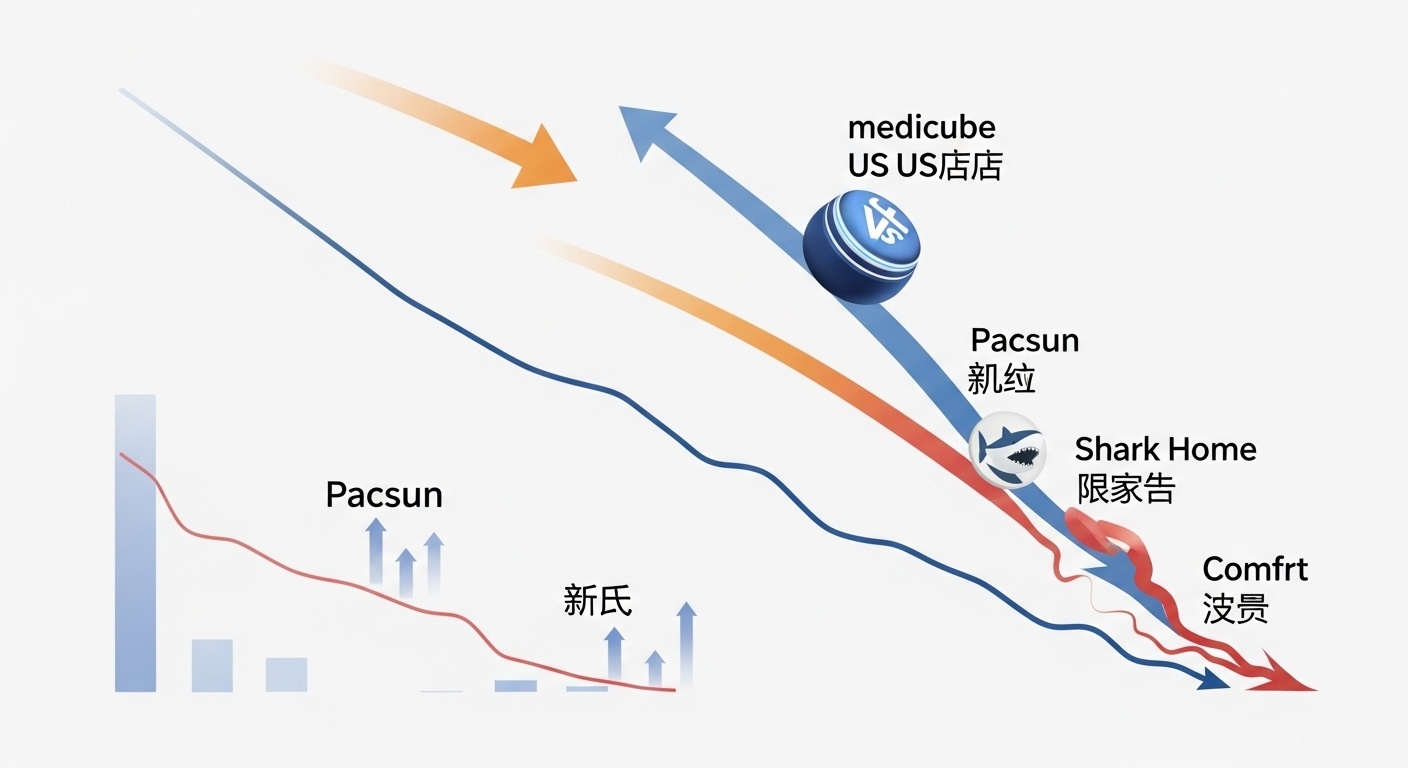
In July 2026, TikTok Shop's top 10 sellers collectively experienced a significant revenue decline, dropping from $120.56 million in June to $104.94 million. This overall downturn was accompanied by substantial shifts in rankings. While Medicube US Store impressively held its number one position for the fourth consecutive month, Shark Home saw a dramatic plunge from third to tenth place. The latest figures also highlight the dynamic nature of the market, with new entrants like Pacsun and Comfrt breaking into the top ranks.
TikTok Shop's Top 10 See Overall Revenue Decline and Significant Rank Shifts
In July 2026, the total revenue for TikTok Shop's top 10 sellers amounted to $104.94 million, a notable decrease compared to June's $120.56 million. Amidst this general decline, rank fluctuations were particularly pronounced. Only two companies, Medicube US Store at number one and QVC, Inc. at number two, managed to retain their June positions. The remaining eight companies either shifted ranks or were new entries to the list.
Shark Home experienced the most significant drop, plummeting from second place in May and third in June to tenth in July. Its July revenue stood at $7.83 million, representing more than a 50% loss from its peak revenue in May. Despite recording the lowest sales volume on the chart with 37,800 units sold, Shark Home maintained the highest average selling price at $207.21 per item.
Medicube Maintains Dominance as New Players Emerge
Medicube US Store firmly held onto its leading position for the fourth consecutive month in July, generating $21.13 million in revenue. Although its revenue decreased by 7.5% compared to June, its impressive sales volume of 867,790 units and the lowest average selling price of $24.34 suggest a sustained appeal to consumers. This indicates that a high sales volume coupled with an accessible pricing strategy is a key success factor on TikTok Shop.
The latest chart also highlighted the strong performance of new entrants. Pacsun entered the top 10 for the first time, securing ninth place with $7.93 million in revenue and boasting the highest growth rate at 63.1%. Similarly, Comfrt made a powerful debut, ranking sixth with $8.60 million in sales, demonstrating a strong presence despite being absent from previous top 10 lists. These new arrivals displaced Ninja Kitchen US and SEESE Store from the June rankings.
Strategies for Top Brands to Maintain Ranks Amid Intensifying Competition
Despite the overall downward trend in revenue, some companies successfully improved or maintained their positions. Crocs climbed from eighth place in June to fifth in July with $9.11 million in sales, marking its first entry into the top five. Tarte Cosmetics recorded $7.94 million, a slight 0.4% increase from the previous month, securing eighth place. Dr.Melaxin demonstrated resilience, maintaining a spot within the top four for three consecutive months, achieving third place with $11.06 million in revenue.
Meanwhile, Halara US held its seventh-place spot despite an 18.9% revenue decrease, bringing in $8.38 million. VEVOR Store moved up one position from fifth to fourth, even with its revenue decreasing by 17.5% to $9.27 million. These cases illustrate that top-tier TikTok Shop sellers are fiercely implementing diverse strategies to maintain or improve their rankings, irrespective of revenue fluctuations.
The Evolving Competitive Landscape of the TikTok Shop Market
The analysis of TikTok Shop's top 10 sellers for July 2026 clearly demonstrates the dynamic and unpredictable competitive environment within the platform. While some companies maintain their leading positions for extended periods, others experience significant rank changes in a short time. This suggests that sales on TikTok Shop are influenced by a complex interplay of factors, including product quality, timely marketing strategies, customer engagement, and price competitiveness.
The entry of new players into the top ranks and the sustained performance of established brands underscore that TikTok Shop continues to offer new opportunities while simultaneously demanding constant innovation from existing brands. Ongoing attention will be focused on which companies will distinguish themselves in this evolving competitive landscape and adapt to changing consumer trends.